Office of Library and Information Services
- Library
- The Tajen University Library was established at the time of the school's founding in 1966. The library was originally housed on the third floor of the Nightingale (E) Building. For more and better library facilities, the school began planning construction of the new Administration and Library Building, which opened in March 2001.
- Computer Center
- The Computer Center was founded in 1980 as a second-level unit affiliated with the Office of Academic Affairs. After Tajen College was upgraded to the Tajen Institute of Technology in 1999, the Computer Center was promoted to a first-level unit responsible for planning and implementing the university's information technology environment. A high-speed campus network environment has been established, and Wi-Fi coverage reaches more than 90% of the campus.
- Introduction
- To integrate the university's library collections and information resources, enhance research and learning support for faculty members and students, and support the computerization of university administration, the Library and the Computer Center were merged into the Library & Information Center on August 1, 2008. Following an organizational restructuring in August 2026, the unit was renamed the Office of Library and Information Services.
- Structure
- The Office of Library and Information Services consists of two units: the Information Service Center and the Readers and Collections Section. The Readers and Collections Section covers various library services, while the Information Service Center encompasses services such as network management and system development.
Library Services:
In 1991, the Library began establishing its library automation system. In 2004, to improve workflow and provide better services to readers, the library automation system was replaced with the INNOPAC system. Currently, the Tajen University Library spans five stories and contains more than 570,000 volumes of books and over 400 Chinese and Western periodical titles. Additionally, the library provides access to 172 electronic databases, more than 13,100 online full-text journals, and over 13,000 units of non-book materials (such as CD-ROMs, videos, audiocassettes, and maps). The building provides more than 8,600 square meters of floor space and approximately 1,000 study seats. A user-friendly network environment has also been established, including free Wi-Fi access and approximately 800 network connection ports for high-speed internet access.
The library's hours of operation have been extended from 65 to 80 hours per week, including Saturdays and Sundays. The library remains closed on national holidays. In addition to library services and office facilities, the building provides individual research rooms, group discussion rooms, multimedia rooms, and dedicated library instruction rooms, which are available to faculty members and students.
- Administrative Philosophy of Tajen Library
- At Tajen University, we believe that the library is at the heart of an academic institution. We consider the library essential to the academic and professional development of our students. Accordingly, the university continues to invest substantial resources in its library. The library's core collections currently focus on:
- Health;
- Management;
- Sports and Recreation Sciences;
- Social Services.
- In addition, the Library, in cooperation with the Arts Center, has increased its collection of humanities materials, including literature, history, philosophy, and religion. Our goal is to support educational research and encourage independent and critical thinking by providing a broad range of educational resources across multiple disciplines.
- At Tajen University, we believe that the library is at the heart of an academic institution. We consider the library essential to the academic and professional development of our students. Accordingly, the university continues to invest substantial resources in its library. The library's core collections currently focus on:
- Architecture and Facilities
- The Library's architecture is inspired by the philosophy of renowned architect Frank Lloyd Wright, who believed that a building's furniture should serve as a bridge between its facilities and users. Accordingly, the library was designed with spacious interiors, natural colors, and natural wood furniture. To further integrate library resources with its facilities, numerous internet connection ports have been installed, allowing convenient access to online resources from virtually anywhere in the building.
The main responsibilities of Information Services include:
- Supporting the campus information infrastructure.
- Providing information, training, and consultation services.
- Integrating and supporting the university's administrative information systems.
- Supporting synchronous and asynchronous distance learning.
- General Tasks of the Information Service Center
- The tasks of the Information Service Center are as follows:
- Planning, deploying, and maintaining intra-campus and inter-campus networks.
- Managing network access and related regulations.
- Managing information security.
- Managing malware and virus prevention.
- Monitoring and managing network traffic.
- Managing intrusion prevention systems.
- Handling general administrative affairs.
- Providing consultation services and managing computer classrooms.
- Supporting distance learning and producing multimedia teaching materials.
- Performing other assigned duties.
- The tasks of the Information Service Center are as follows:
- General Tasks of the System Development Section
- The System Development Section is responsible for developing information management systems and portals to support academic and administrative services at Tajen University. The primary application architecture includes client-server and web-based systems supported by distributed databases and Microsoft .NET technologies. Over the years, the section has worked to implement office automation and system integration for academic affairs, student affairs, general affairs, and other administrative operations. By continuously improving its capabilities in programming, system analysis, database design, and system maintenance, the section develops and integrates information systems tailored to the needs of Tajen University. Its goal is to establish an integrated data center that provides comprehensive information services to all units across the campus.
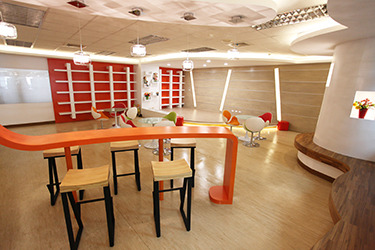
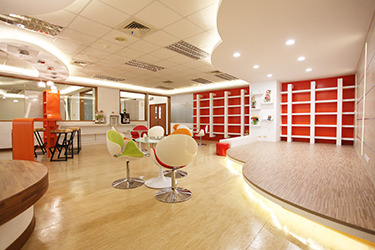
Happiness Reading Corner
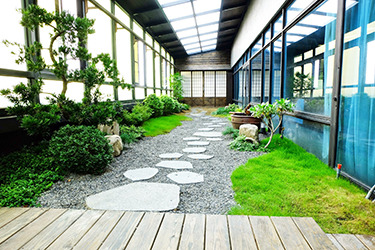
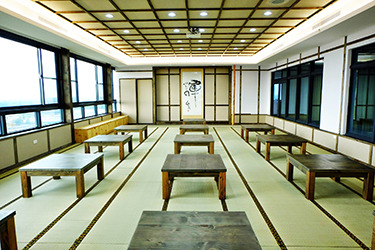
Happiness Zen Square
Building Allocation
3F: Computer Center, Circulation Desk, Electronic Resources Room, and Reference Section.
4F: Current Periodicals, Bound Periodicals, Newspapers, and Photocopiers.
5F: Western-Language Collection, Chinese and Japanese Collection 000–399, Discussion Room, and Administration Office.
6F: Chinese and Japanese Collection 400–999, Discussion Room, and Study Room.
7F: Audiovisual Center and Learning Resource Center.